

Designing for Endurance: Reflections on Practice, Material, and Responsibility
This week at Nottingham Trent University, two lectures sat in conversation with one another in a way that felt unusually grounding. One focused on the realities of working within the fashion industry as it exists today; the other challenged how fashion might be reimagined if it were designed around responsibility rather than speed or profit. Taken together, they sharpened my thinking about the kind of practice I am building, and the values I want to place at the centre of Detta Knitwear.
A lecture by Lewis Heath, now Senior Pattern Cutter at Simone Rocha, offered an unfiltered account of what it takes to sustain a career in fashion. His journey was marked less by sudden breakthroughs and more by persistence: working in a pub for months after graduating, applying continuously for jobs, starting out cutting other people’s patterns at a supplier, and gradually building experience across brands including Tommy Hilfiger, G-Star, and Marques’Almeida before returning to Simone Rocha, where he now leads menswear pattern cutting.

Eddie Redmayne wearing Simone Rocha
What stayed with me was the emphasis on endurance — not just of garments, but of people. Fashion houses are demanding environments, Lewis explained, and they teach resilience quickly. Long hours, repetition, pressure, and technical rigour are part of the learning curve. Over twelve years and more than two thousand digital patterns, his practice has been shaped by discipline and commitment rather than glamour.
As someone building a new heritage knitwear brand, this reinforced something that already matters deeply to me: design thinking must be actively protected. Making is essential, but if work is to be truly design-led, time has to be consciously ring-fenced for exploration, testing, and reflection. Longevity, durability, and joy are not outcomes of efficiency alone — they are the result of considered design decisions, made slowly and revisited often.
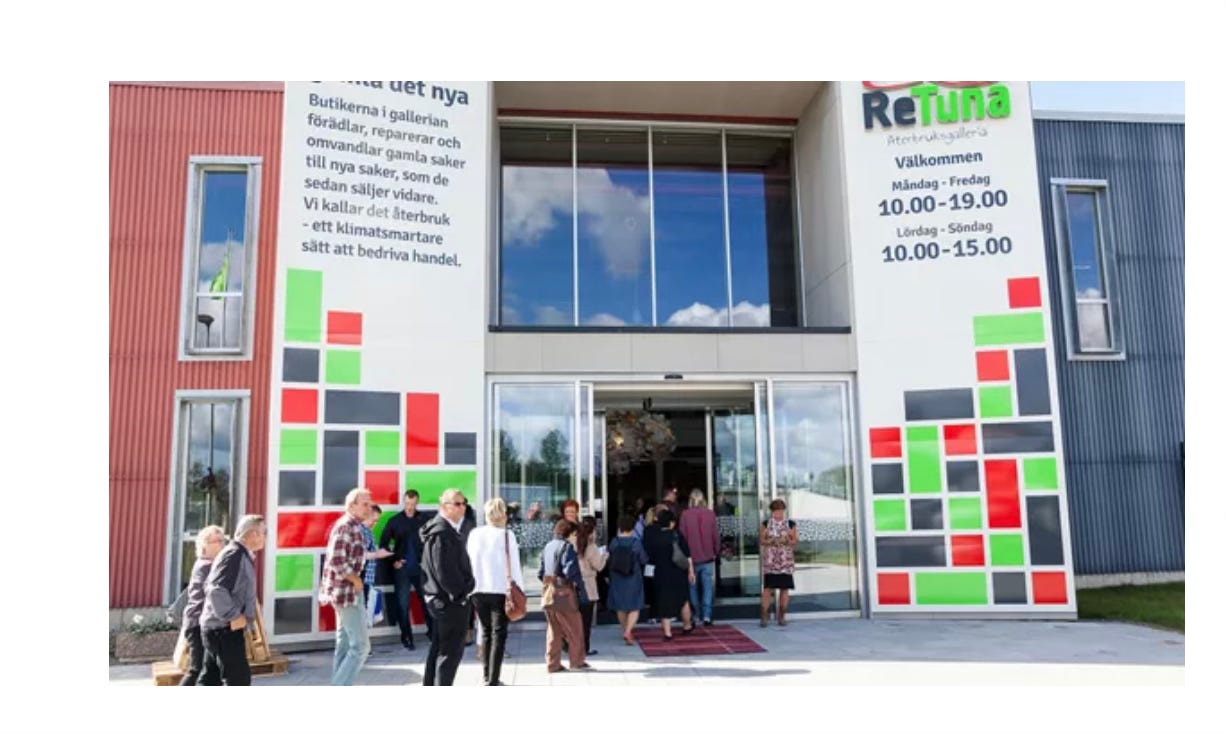
Retuna Store in Sweden
Earlier in the week, a lecture by Mary-Ann Ball approached fashion from a different, but equally vital, perspective. Her research into circular fashion centred on ReTuna Återbruksgalleria, the world’s first second-hand shopping mall, opened in Sweden as part of a wider municipal climate strategy. At ReTuna, retail is used as a tool to reduce waste rather than generate profit, and success is measured through waste diverted from landfill, skills developed, and community engagement.
What was particularly compelling was the way design is positioned within this system. Circular fashion, Mary-Ann argued, makes design more important, not less. It is not enough for garments to be ethical — they must still feel like fashion. Design becomes a tool for care, repair, and longevity, and fashion becomes a social practice rather than a purely commercial one. Waste is reframed as a resource, and making is reconnected to responsibility.
Together, these lectures prompted a deeper reflection on the foundations of my own practice. As Detta Knitwear develops, I’m becoming clearer about the principles I want to embed into the brand from the outset — not as marketing language, but as practical commitments that shape how garments are designed, made, worn, and cared for.
At this point, five pillars feel central:
Longevity
Designing garments to last — physically, emotionally, and culturally. This means resisting seasonal disposability and creating pieces intended to be lived with over time.
Circularity
Building systems that support repair, reuse, and multiple lifecycles. Circularity is not an add-on, but a framework that influences design, materials, and aftercare.
Design-led practice
Protecting time for thinking, testing, and exploration. Design decisions must lead the process, rather than being rushed in service of production.
Heritage
Treating historical knowledge, craft, and working garments as living systems. Heritage is not nostalgia, but accumulated intelligence that can inform contemporary needs.
Material integrity
Working with natural materials — particularly wool — that are inherently suited to longevity and circularity. Wool’s durability, repairability, antibacterial properties, and reduced need for frequent washing make it an honest and intelligent material choice. Material integrity is not only about provenance, but about choosing fibres that behave responsibly over time.
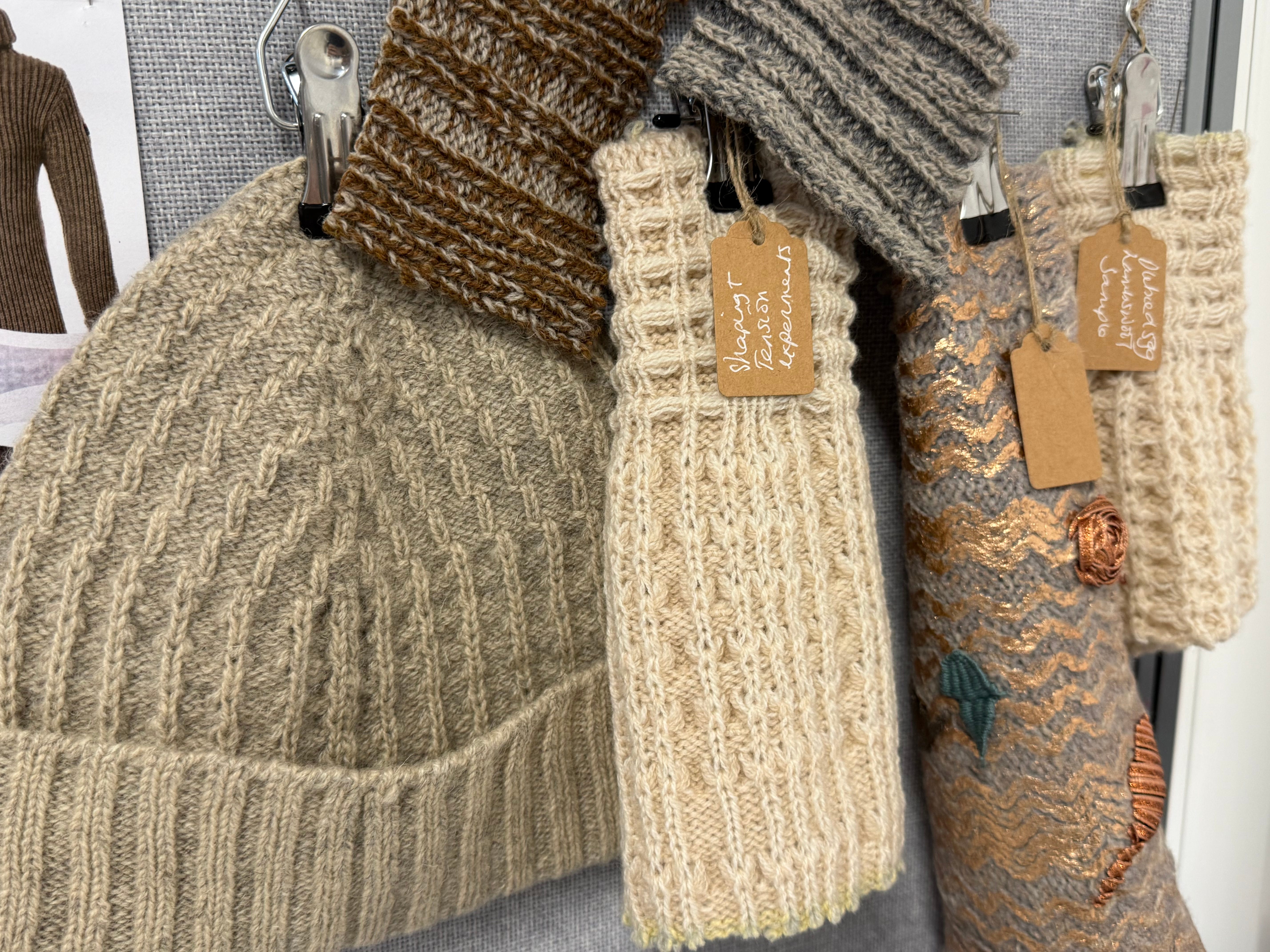
These principles raise practical questions I’m actively working through. How can I design garments that invite repair rather than replacement? How do I communicate the qualities of wool — its resilience, its capacity for mending, its suitability for long-term wear — to the wearer? Could care guidance, mending tutorials, or opportunities to return garments for repair and refreshing become part of the brand experience?
More broadly, am I designing primarily as a circular fashion designer — focused on durability and reuse — or as an aftercare-led designer, concerned with fit, maintenance, and long-term relationships with garments? Increasingly, I see these as overlapping roles rather than opposing ones.
These lectures didn’t offer definitive answers, but they clarified the direction of travel. Building something meaningful takes time, resilience, and intention — whether that’s a career, a garment, or a brand. For me, the task now is to ensure that the values I care about are designed in from the beginning, and that Detta Knitwear grows slowly, thoughtfully, and with integrity.